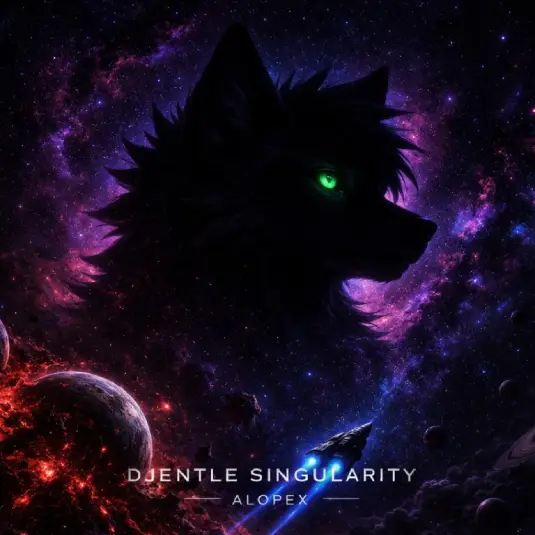
A Pathetic Creature of Meat and Bone
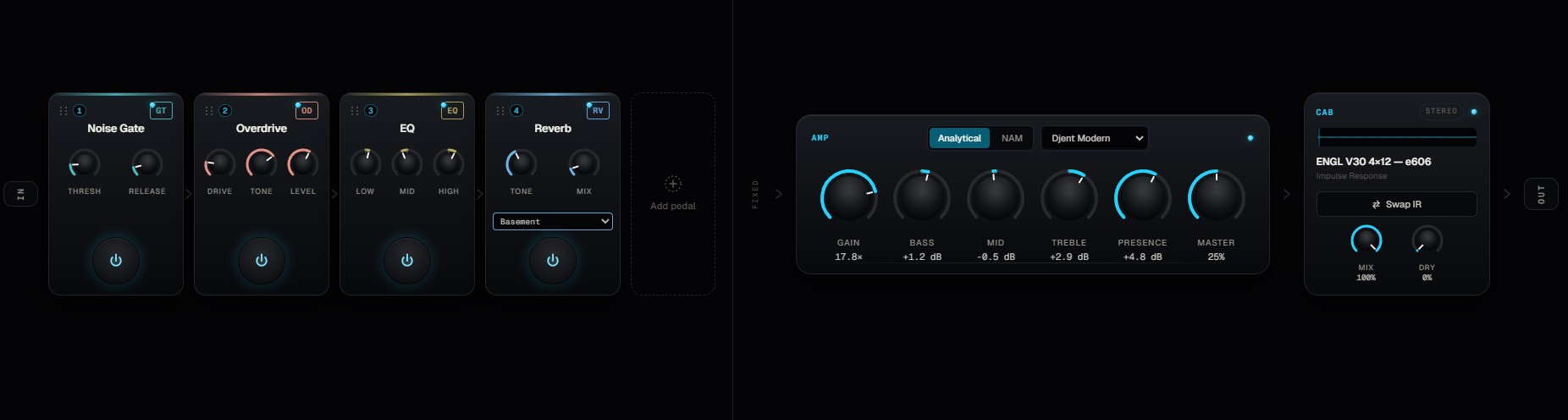
Djent Modern at 17.8× into an ENGL V30 4×12. Overdrive pushes the front, EQ shapes it back, gate behind keeps the rests dead silent.
As Alopex, I make music. As Axion's creator, I made the tool I needed to make the music.
A 50-minute instrumental progressive metal record about the future we're rapidly arriving at - written and largely produced on a guitar rig that came together around it. Shipping on every Fonix One unit, later this year.
Three projects, one desk. Djentle Singularity is a record about the future. Axion is the rig I built to help make it. Fonix One is the device it ships on. They were never going to come out separately.
I was writing this record at the same desk I was patching the engine that ended up making it sound the way it does. The riffs and the DSP commits share timestamps. Some nights one fed the other; some nights they got in each other's way; most nights I couldn't really tell which was which.
It's an instrumental progressive metal record, djent (if you want a tighter genre tag) about the arrival of the singularity. The musical motifs split along the obvious axis: hopes and fears for the future we're rapidly arriving at, best-case and worst-case outcomes in adjacent keys. It's passionate, intricate, detailed, and at times beautifully raw. My own words. I'll stand behind them.
Building the album back-fed the tool. Several of Axion's stompboxes exist because I needed them for a specific song and tuned them on a take I'd already recorded the day before. NAM capture support (now one of Pro's headline features) got pushed up the roadmap because the album required amp sounds I couldn't get otherwise. And the mobile interface, which I'd half-treated as a "nice to have," got serious effort once I noticed how often I was catching a riff on my phone in another room and didn't want to walk back to a laptop to flesh it out. The tool got built around the work as much as the work got built on the tool.
So when the question came up about where the record should live.. streaming service, Bandcamp, flick it up on YouTube.. none of the answers fit. The album ships on every Fonix One. Not "available on" the device; on it, from the moment you unbox. Same studio, same philosophy, the right home for a record about owning the future rather than renting it.
The writing is mine. Melody, harmony, rhythm, structure, instrumentation, the album-level flow, the concept itself, all from my head and spanning years of ideas. Every riff went through me before it went anywhere else.
A surprising amount of this record began life years ago as fragments: ten-second guitar clips, late-night voice notes hummed half-awake into a phone microphone, rhythms beatboxed into whatever recorder I had nearby before the idea disappeared again. Some of those ideas are more than a decade old.
That's the real heart of this album.
For years, these pieces lived scattered across hard drives, old laptops, aging phones, abandoned DAW sessions, and folders full of half-finished projects waiting for a version of my life that had enough time to finish them. I always intended to come back to them someday.
When I realized what modern generative tooling could actually do, not as a replacement for creativity, but as a way to bridge the production gap between imagination and execution, something clicked into place for me. For the first time, finishing this record stopped feeling hypothetical.
So I did it.
With AI tooling. With Axion. With long nights, iteration, stubbornness, and an unreasonable number of archived project folders. The technology accelerated the process, but the ideas themselves had already been waiting for years.
I'm extraordinarily proud of what came out the other side.

Pulled from the album masters. Each one carries a section where Axion was doing the heavy lifting on tone: gate, screamer, amp, cab. The mix moves around them.
Each card boots Axion with the rig loaded (gate, drive, amp, cab, post chain) and lets you adjust it from where I left it.
Djent Modern at 17.8× into an ENGL V30 4×12. Overdrive pushes the front, EQ shapes it back, gate behind keeps the rests dead silent.
Djent Modern into an ENGL V30, screamer at unity push, plate reverb on tap for the call-and-response section.
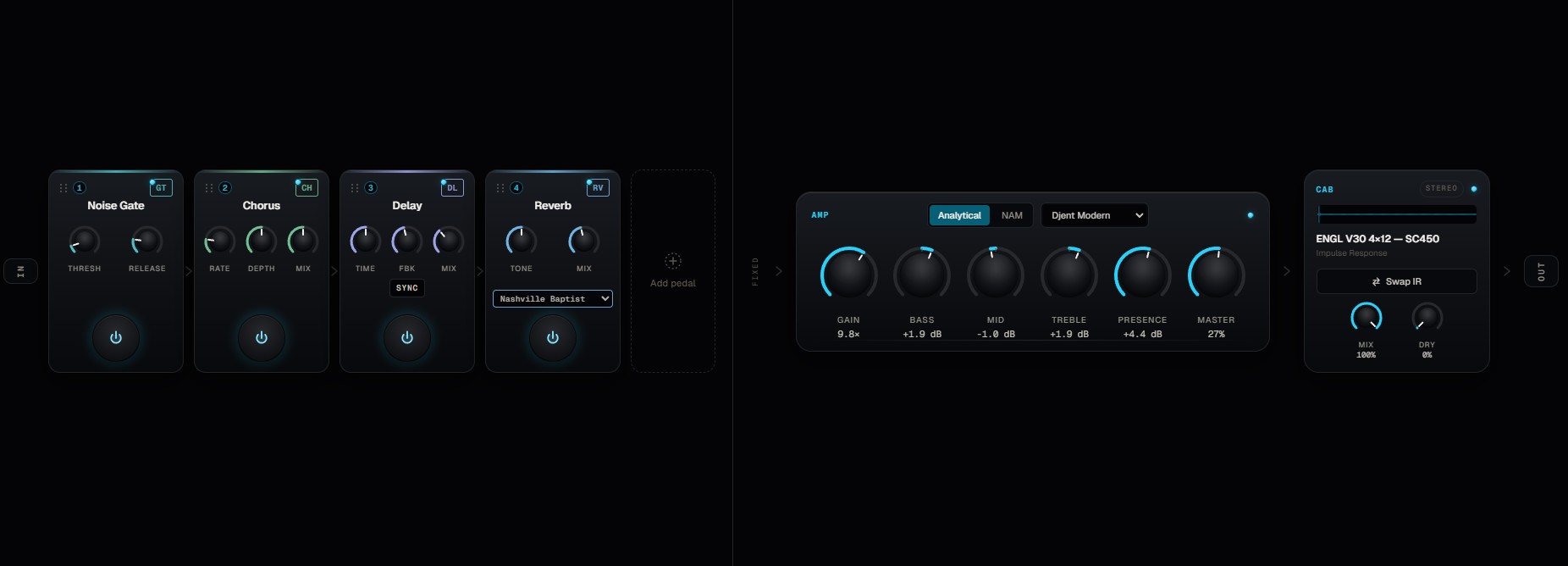
Djent Modern at 9.8× into an ENGL V30, no front-end drive. Chorus and delay shape the rhythm; Nashville Baptist reverb pulls the room back behind it.
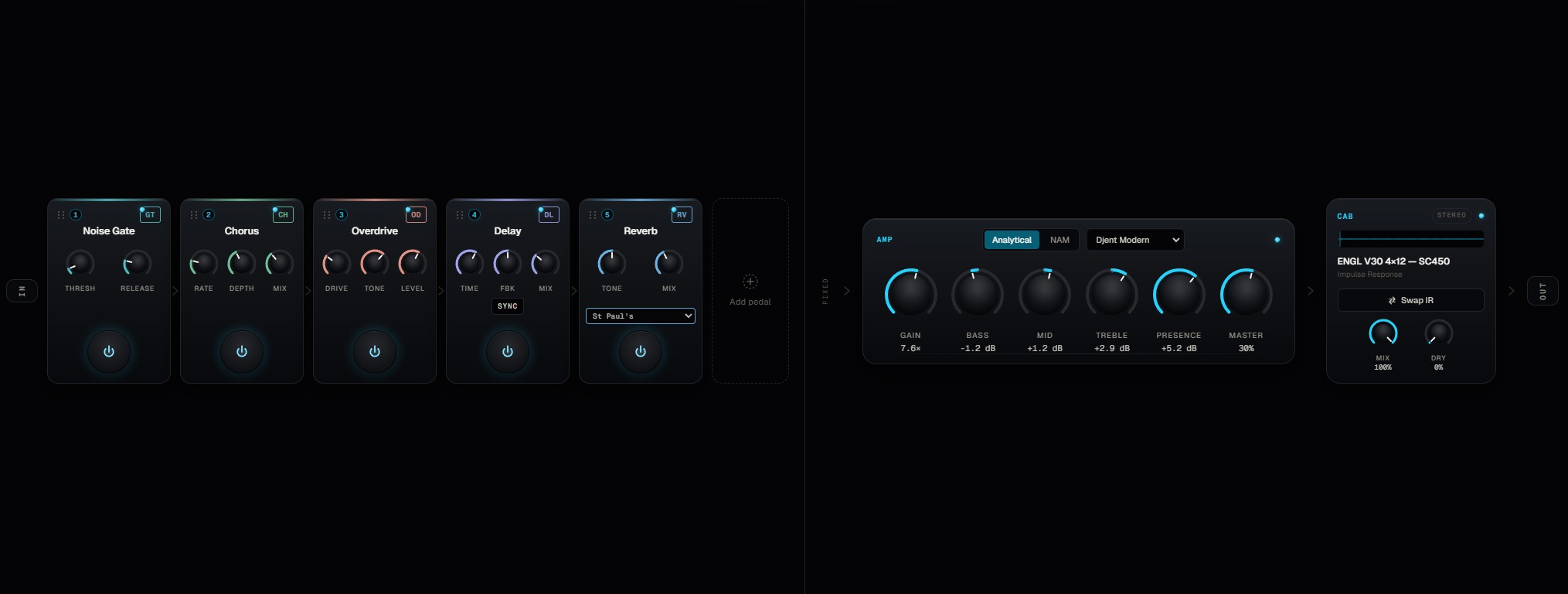
Djent Modern at 7.6× into an ENGL V30. Screamer push on the front, chorus opening up the phrases, delay and St Paul's reverb tail behind every line.
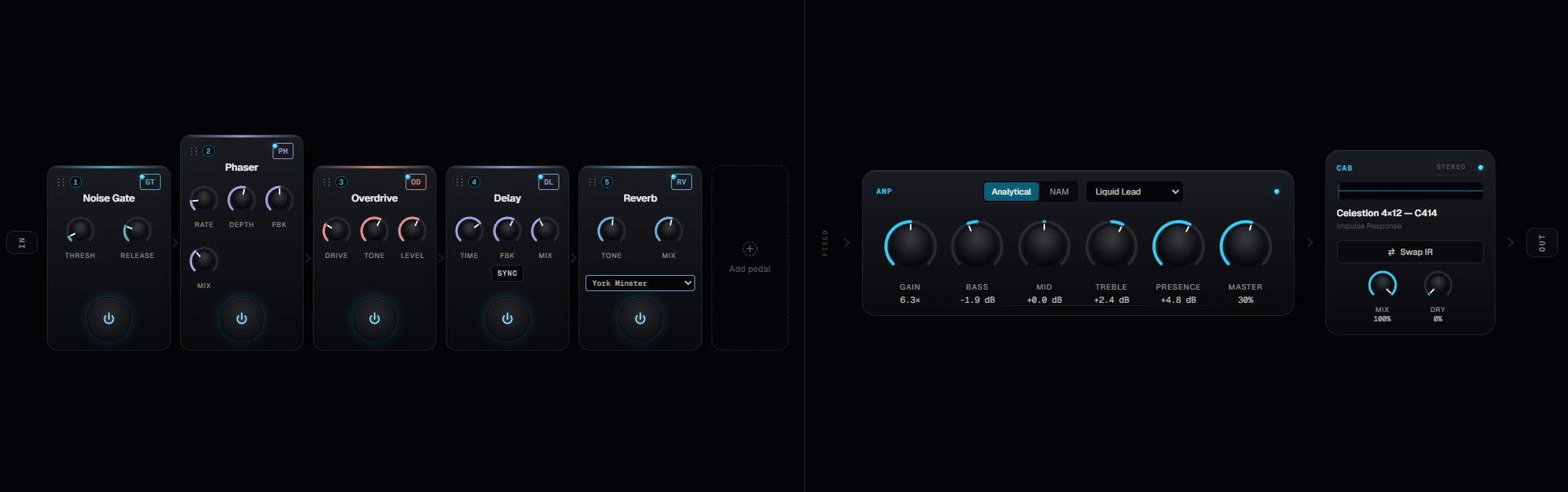
Liquid Lead amp through a Celestion 4×12. Phaser swirling the front, gentle screamer push, delay and York Minster reverb stretching every phrase. The whole song is one breath.
The originals lean on bits of bespoke DSP that don't ship, but these get most of the way there.
Captures from album sessions in Axion. These are the screens I was looking at while tracking.
SESSION · 2025-11-04
SESSION · 2025-12-18
SESSION · 2026-01-22
SESSION · 2026-02-09
Axion exists because picking up a guitar shouldn't require a 4 GB installer. Fonix One exists because listening to music shouldn't require an algorithm's permission. Different problem, same instinct.
Djentle Singularity ships on every Fonix One. Not "available on" the device - on it, from the moment you unbox. That's where the record lives.
Written, performed, produced, mixed and mastered by Alopex.
Tracked in 2025-2026 on Axion (alpha builds 0.2 through 0.9).
One guy, one desk, one album, one tool, one device. If you want to hear the record, the waitlist above is the door. If you want to play with the tones you just read about, the button below opens Axion. Have fun.